Getting started with card modeling is unbelievably easy.
You probably have all the basic materials and tools that you need at home.
And what are they?
Card, like the side of a cereal box, a pair of scissors, a ruler or straight edge, a nail or something with a sharp point for scoring, and glue.
And that is all that it takes.
Once you make your first models, if you find that you really would like to go on with more advanced models, then there are other tools that you should have.
But let us start with the basic tools that you need to make models that you find in the cartonbuiltmodels category.
cartonbuiltmodels are the most versatile models and best for you to use to get started.
Here is a complete list of items that a card modeler needs.
Scissors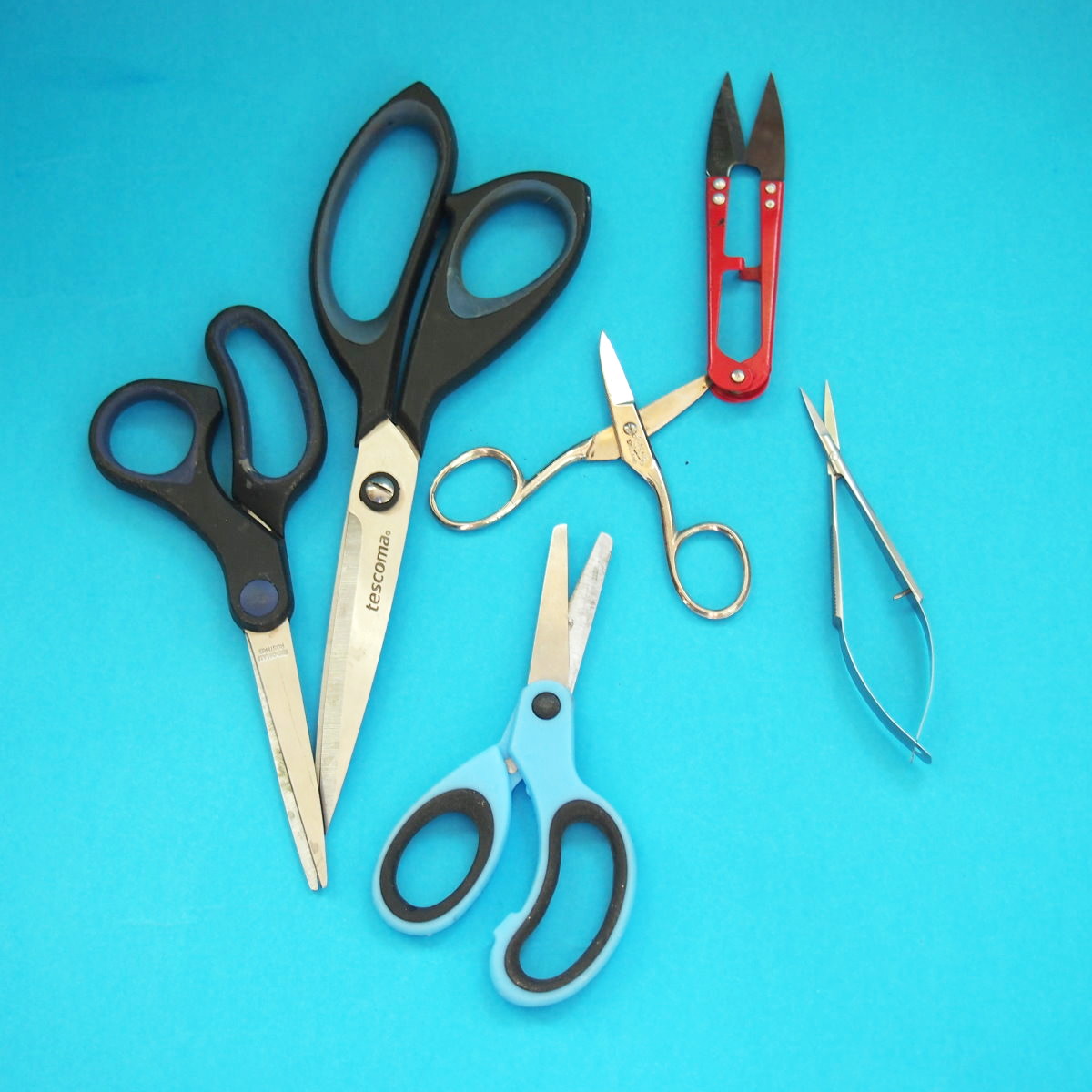
Scissors come in many sizes and shapes. For safety reasons, youngsters should use the round nosed variety. Advanced modelers should use scissors with a long cutting edge. Shorter cutting edges are fine, but a long cutting edges has definite advantages when it comes to cutting accuracy.
Straight Edge
Most people have a plastic ruler. That is fine. A steel ruler is better. But you can use anything with straight edge for scoring.
Scribe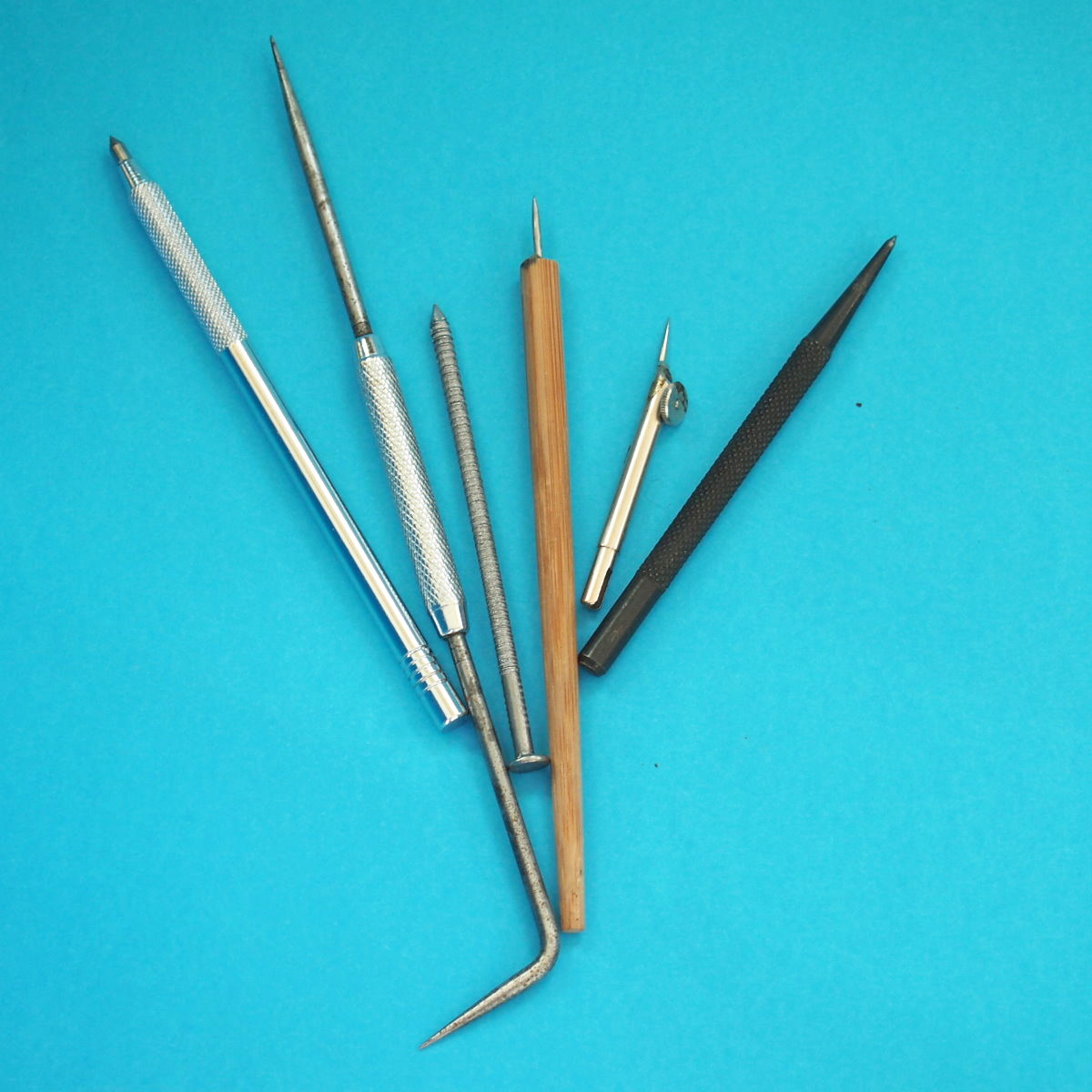
An all-important tool for a card modeler. You use it to provide a guide to make sharp folds.
It can be the sharp point of a pair of dividers, a nail, an engineer’s scribe or a homemade tool made up of a chop stick and small nail. Or anything else that you can dream up.
Glue
Basic office stick glue is absolutely necessary for attaching printed plans to card. . It takes a while to set so you have time to adjust your work.
It goes on smoothly and does not warp the card.
White, Wood Glue or PVA glue.
Which of these you choose depends on how you will use your model. All are cheap and slow drying.
PVA dries clear, does not yellow, and remains flexible.
Contact Glue is another widely used glue. We avoid it like the plague. Many of the brands tend to string. And the strings can mess up a nice surface.
CA glue. 
Great stuff. Particularly good at making your fingers stick together.
CA gel glue is easier to use than the liquid. If we must use ca glue to join things we prefer the jell.
The liquid glue can be used as a stiffener. We use it to make fine cuts of veneer and thin card hard. A thin coat of liquid CA makes them somewhat like plastic.
It can also be used with baking soda to fill holes. Nifty little trick.
If you are going to use CA glue, it is best to have acetone and cosmetic swabs on hand. Acetone is a CA remover. For one thing, it releases stuck fingers quickly. We use a cosmetic swab with acetone to wipe the tips of the glue tubes and cover after use. They are much easier to open the next time you use them.
Acetone is NASTY stuff. Read AND FOLLOW all the safety precautions.
Tacky Glue is an excellent general-purpose glue for the card modeler. It makes a quick joint and holds well. It is widely available.
Vicol – A serious modeler should not be without it. It is made in Poland. And it is not widely available outside Poland.
We call it a paper instant glue. Strong, flexible, dries clear, does not break down over time, couple second bond when joining paper, easy to clean with water or vinegar, stays fluid when not applied to paper.
Butaprene is another great glue. Slow setting, strong, flexible, easy to clean. Use it when you want to be able to adjust a joint. Great when working with clear foil. Does not string until you leave exposed to the air for a few minutes. Watch this video.
Soap And Water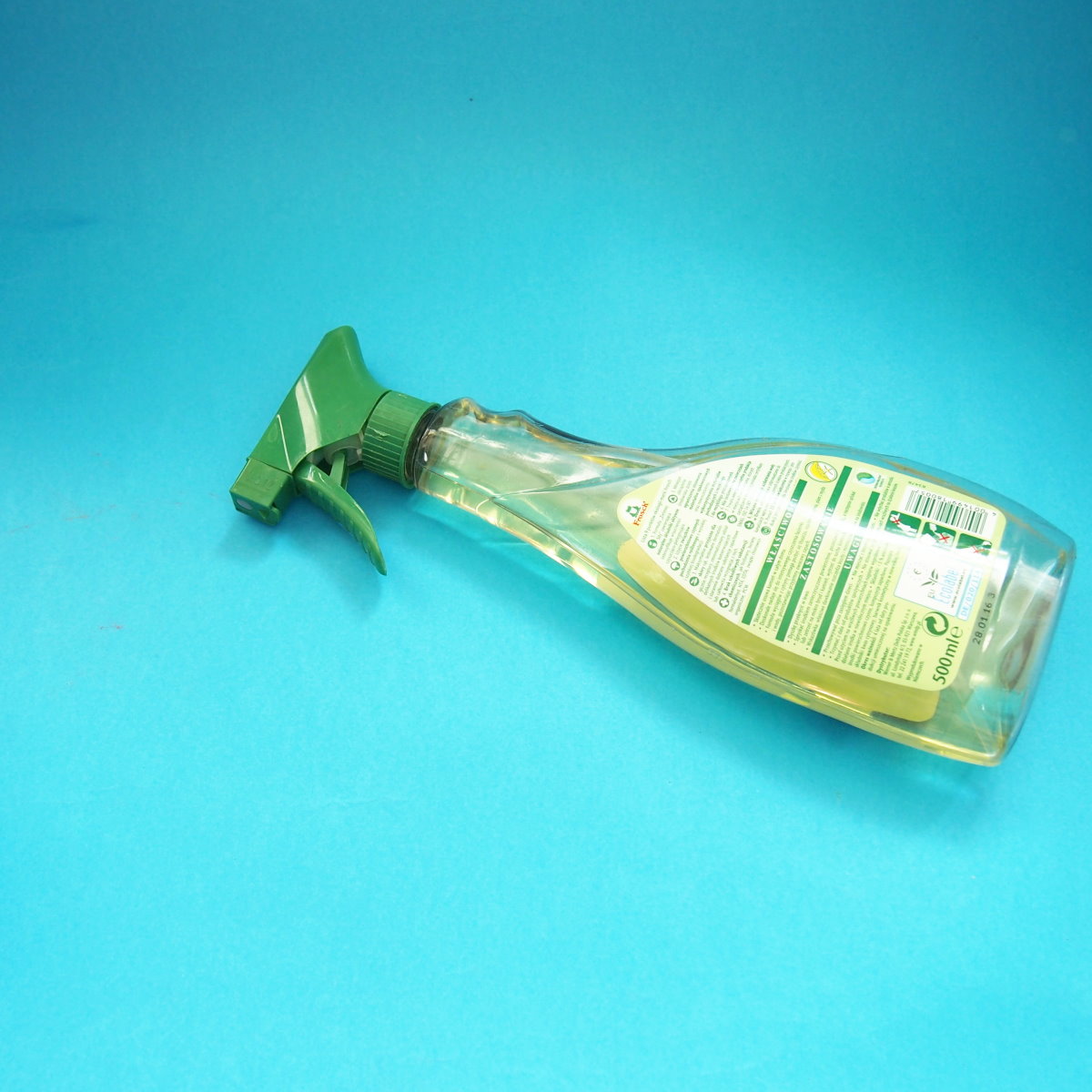
Keep your hands clean. Glue spots can ruin a lot of work.
We keep a spray bottle, filled with soap and water, and hand towels alongside our work bench. Highly recommended.
Card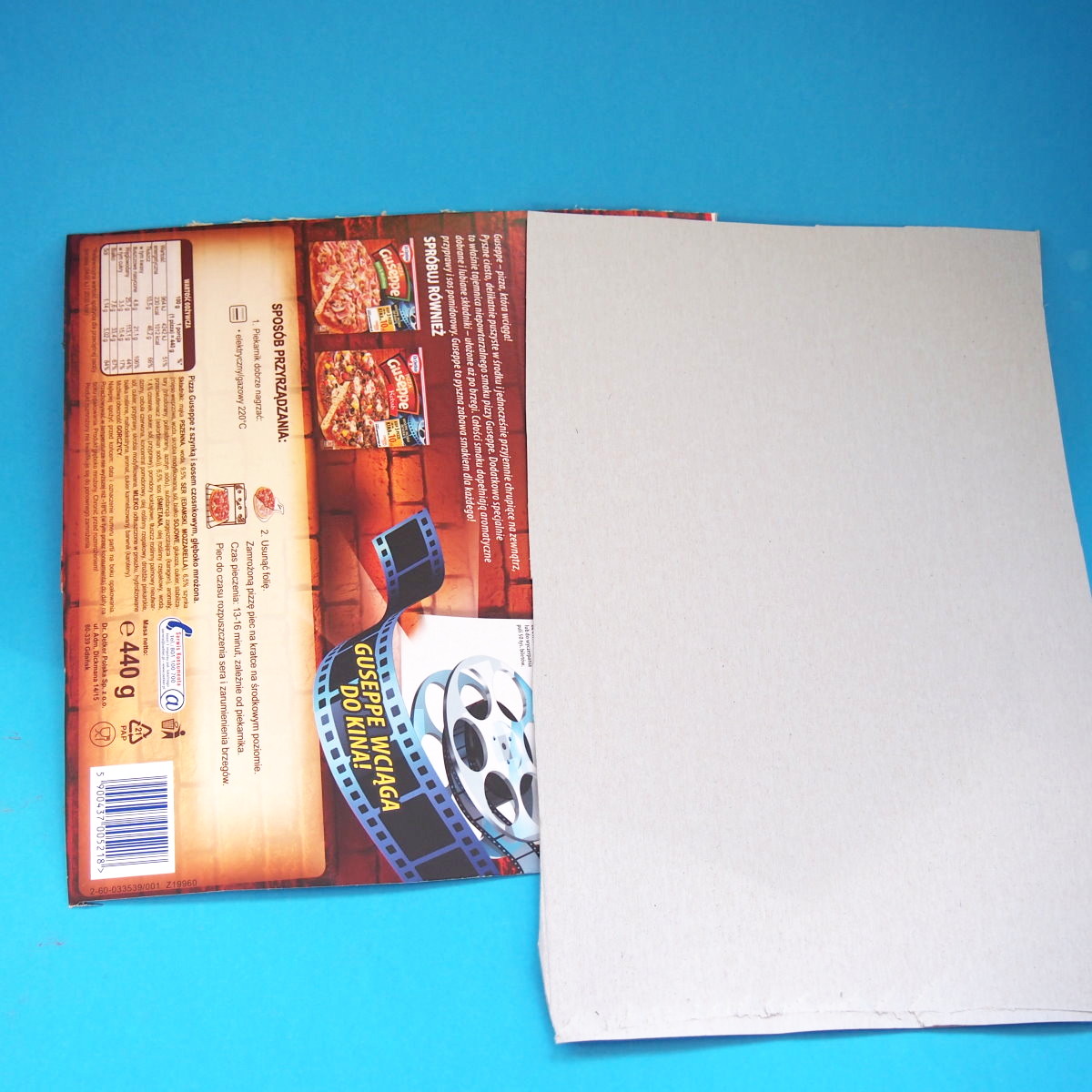
Cereal box card can be depended on to not de-laminate. So it is fine when you are not concerned about strength . For group activities, making some dioramas and for the kids, it is great.
N scalers will find that .5mm card is an excellent choice. When added strength is needed, .9 or 1.25 mm cart fits the bill.
For most other work, 1.25 card is good. It is thick enough to be strong and thin enough to make for easy cutting of holed for windows, etc.
2mm card is used for bases and platforms,
I don’t use foam board. Getting well defined edges can be difficult.
More advanced modelers will require all of the above plus.
Modeling Knife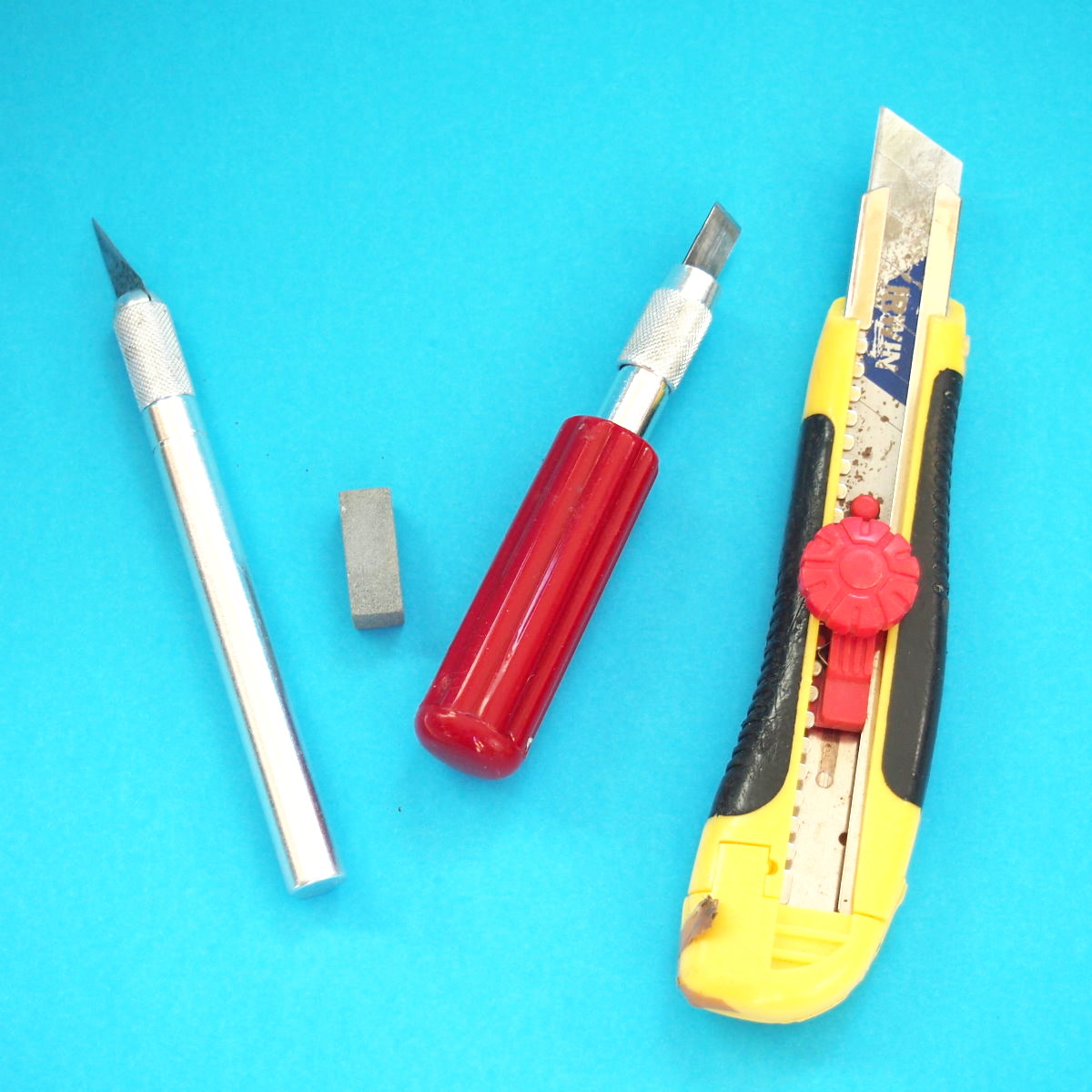
That general term includes box cutters (large and small), xacto type hobby knives, scalpels, razor blades, etc.
Add a sharpening stone and treat your knives like a straight razor. It makes cutting easy and saves a lot of money wasted on replacement blades. How to sharpen straight razors videos are on YouTube.
We use all of the above – especially razor blades.
Cutting Pad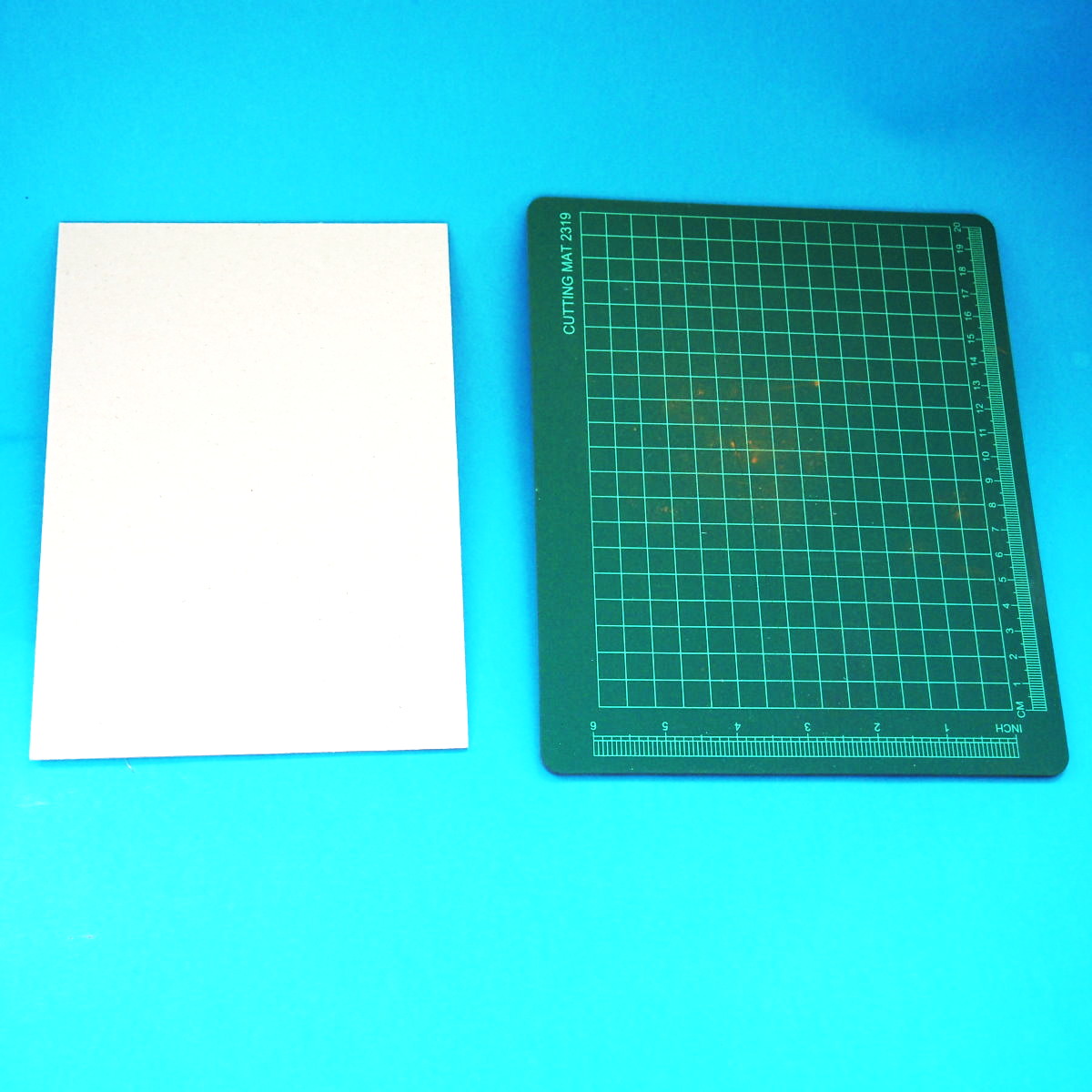
When you watch videos you see the big green cutting pads with dimension grids. If you are going to make videos to sell something, get one of those expensive things.
Instead of a cutting pad, we use hard, 2mm thick card. It is cheap, we don’t worry about getting paint or glue on it, and we don’t worry about making deep cuts that would scar a green pad.
When the green pad gets cut, painted, glued, and messed up, after a string of unprintable words, we cry.
When the card gets cut, painted, glued, and messed up, throw it out and use another nice clean piece.
When we make videos or pictures, we use the expensive green pad for show. When the video is done, it gets put away and out comes the hard card.
Sticks
Coffee stick, chop sticks, tooth picks, and skewers can be used as gluing aids, supports, jigs, for making special tools, mixing and much, much more.
Markers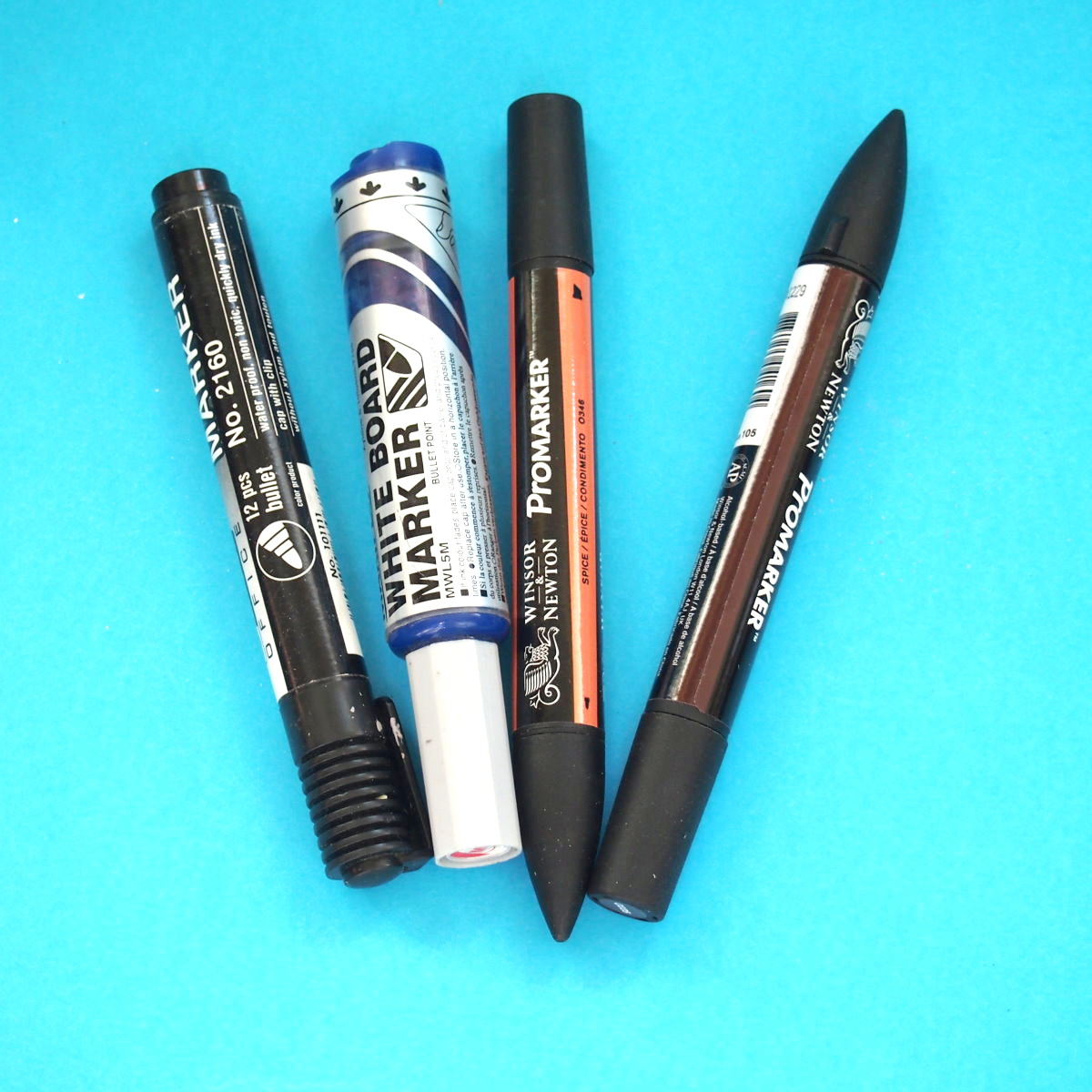
Use to color edges, tabs and anything else where you should cover or adjust colors when you don’t have to be concerned about the color bleeding.
Pastels
Pastel pencils and chalk are at most art supply stores. Good for blending, covering and weathering.
Tweezers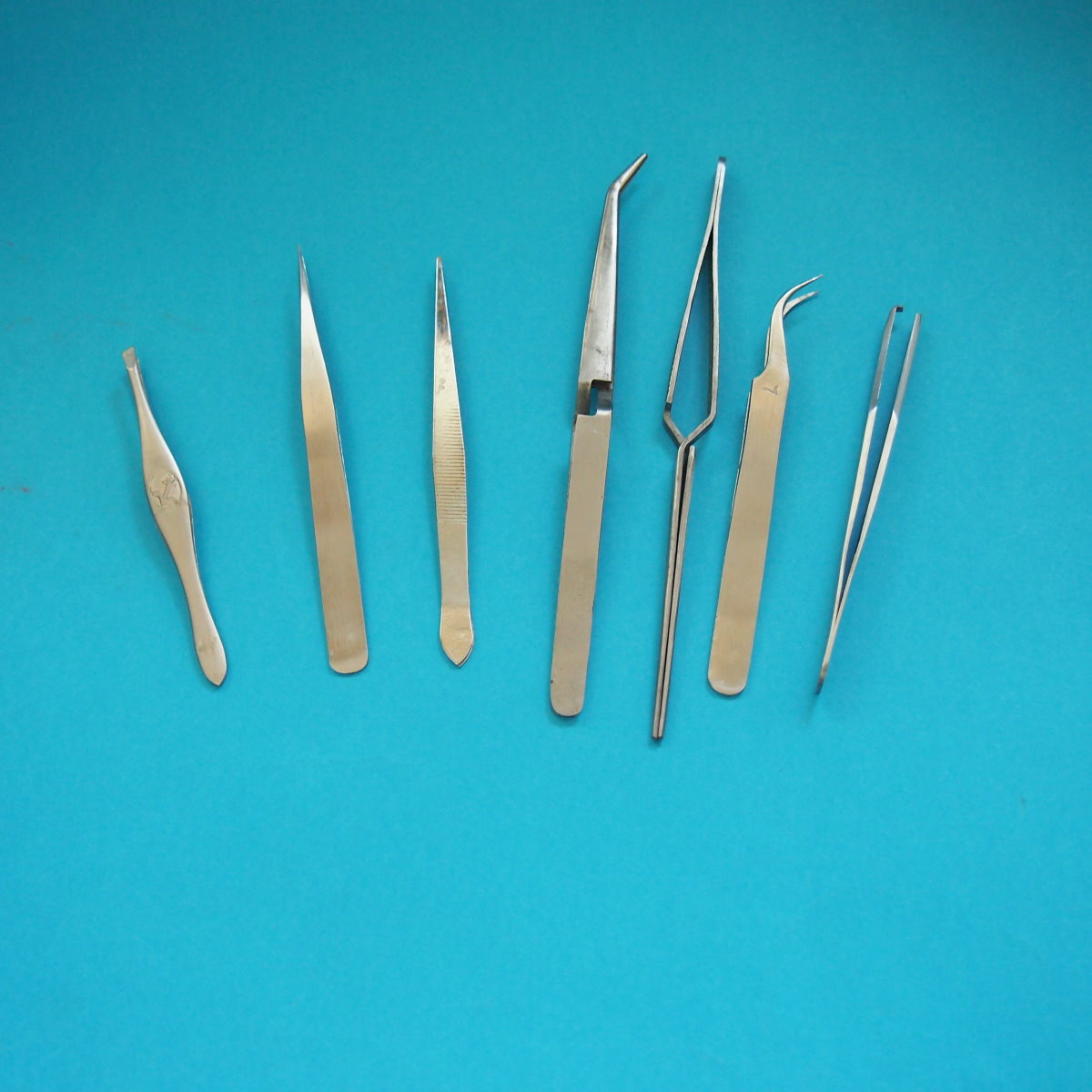
Sharp tipped, dull tipped, locking, soldering. We have 8 different kinds.
Others
Forceps are amazingly useful. We use them quite often.
Masking tape comes in handy all the time.
Not pictured but extremely useful is double sided tape.
An Archimedes drill can be useful.
Weights such as the steel bar shown in the picture, sockets from your ratchet wrench, and anything else laying around will be necessary at one time or another.
Sanders
Finger nail and callous files are excellent. Cut the paper finger nail files to fit window and door openings.
Dental Pick – You can make your own out of a chop stick and piece of sharpened wire. This tool gets used and used and used, and then used some more.
Rulers – A steel ruler is best. It can double as your straight edge. Add to the collection scale rulers for the scale in which you are working.
Dividers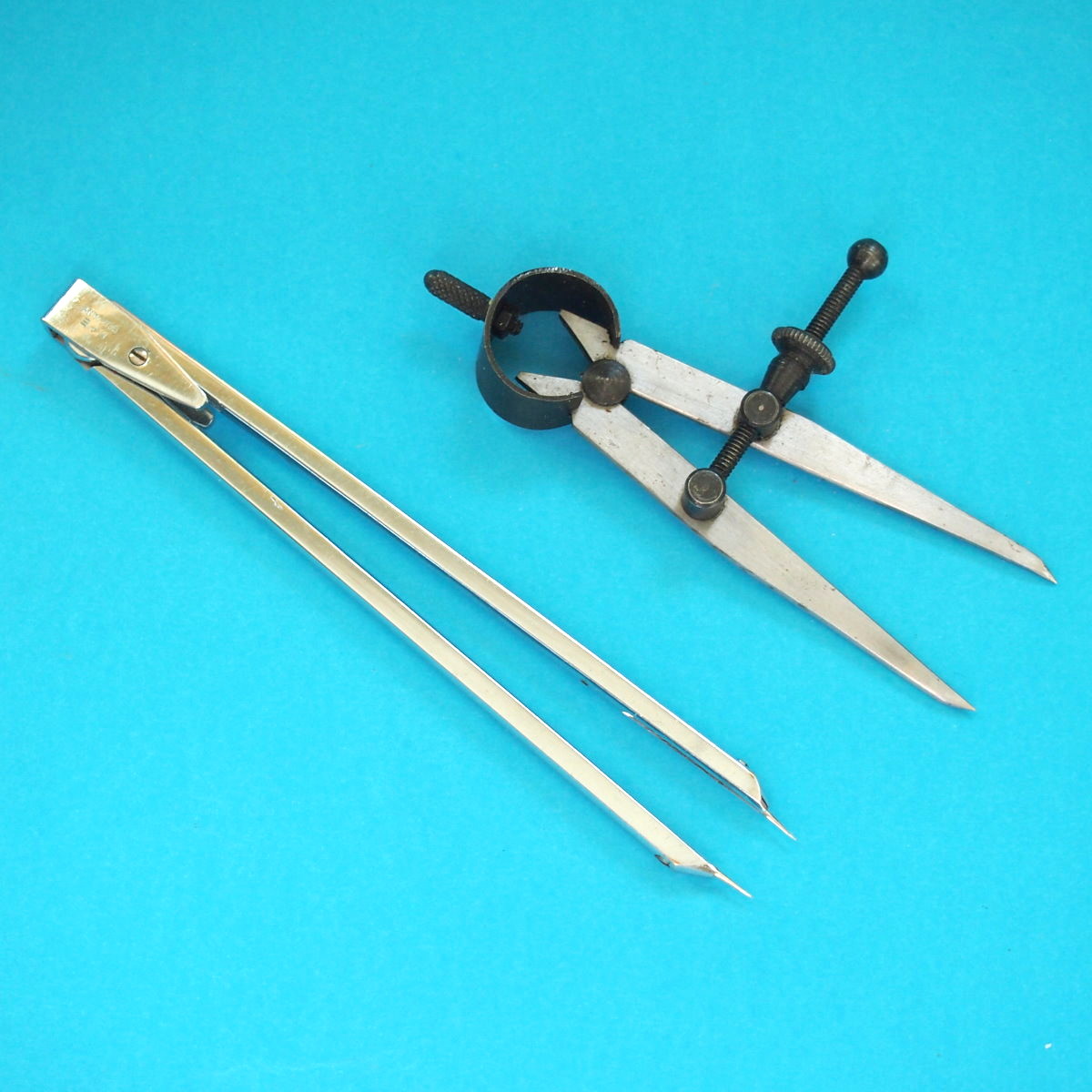
Essential. Get GOOD ones.
Don’t buy cheap. Buy expensive and cry once. Buy cheap and cry every time you use them.
Square – A plastic square is fine. And engineers square is better.
Questions or Comments, Contact us.